

In the waters straddling Ha Long Bay and Lan Ha Bay, a limestone mountain has been pierced by the sea, creating a passage that leads into a secluded lagoon within. Locals call it Sang Toi Cave – or "Hang Sang, Hang Toi" (Light Cave, Dark Cave) – because the cave has two sections with completely different lighting conditions. Without the grand stalactites of larger caves, Sang Toi captivates with the thrill of exploration: gliding by kayak or sitting in a rowboat through low stone arches, then suddenly emerging into a tranquil lagoon enclosed by sheer cliff walls.
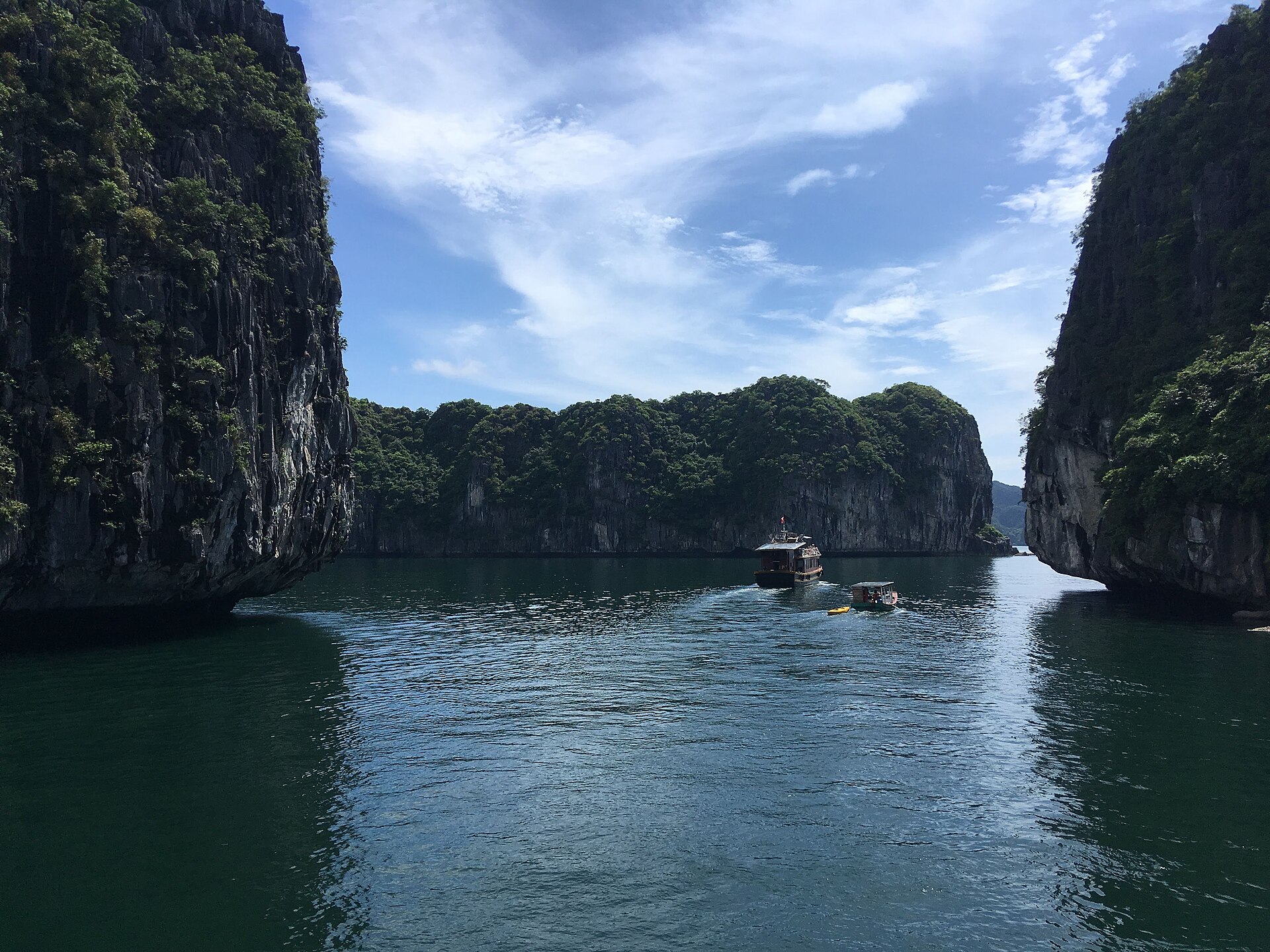
Limestone cliffs and a narrow waterway in Lan Ha Bay – the bay where Sang Toi Cave is located. Photo: Christophe95 / Wikimedia Commons, CC BY-SA 4.0.
Where is Sang Toi Cave?
Sang Toi Cave is located within Lan Ha Bay, part of the Cat Ba Archipelago (Hai Phong City), in the area bordering Ha Long Bay. Since 2023, this entire region has been inscribed as the UNESCO World Heritage Site "Ha Long Bay – Cat Ba Archipelago." It takes around 30 minutes by boat from Cat Ba town to reach the cave; for visitors cruising from Ha Long, Sang Toi Cave is typically a morning excursion before the vessel returns to port.
Situated deep within the bay, the area surrounding the cave remains largely unspoiled: few large boats, clear and calm waters, and cliffs draped in lush forest. Tourist boats and cruise ships cannot enter the cave, so they anchor outside while guests transfer to kayaks or rowboats.
Why Is It Called Sang Toi Cave?
The cave consists of two passages through the mountain:
-
Hang Sang (Light Cave): the wider, more open passage, approximately 3 m high and 4 m wide. Natural light filters in from both ends and reflects off the water's surface, allowing you to clearly see the rock walls and the clear bottom as you pass through. This is the passage most visitors take.
-
Hang Toi (Dark Cave): longer, narrower, and lower, with almost no natural light. This section is highly dependent on tidal levels – it cannot be traversed at high tide – so it is often closed to visitors for safety reasons.
After passing through the cave, you enter a lagoon completely enclosed on all sides by rock formations. The water surface is nearly still, broken only by birdsong, the sound of paddles, and occasionally the calls of monkeys on the cliff walls. This is the most memorable part of the experience.
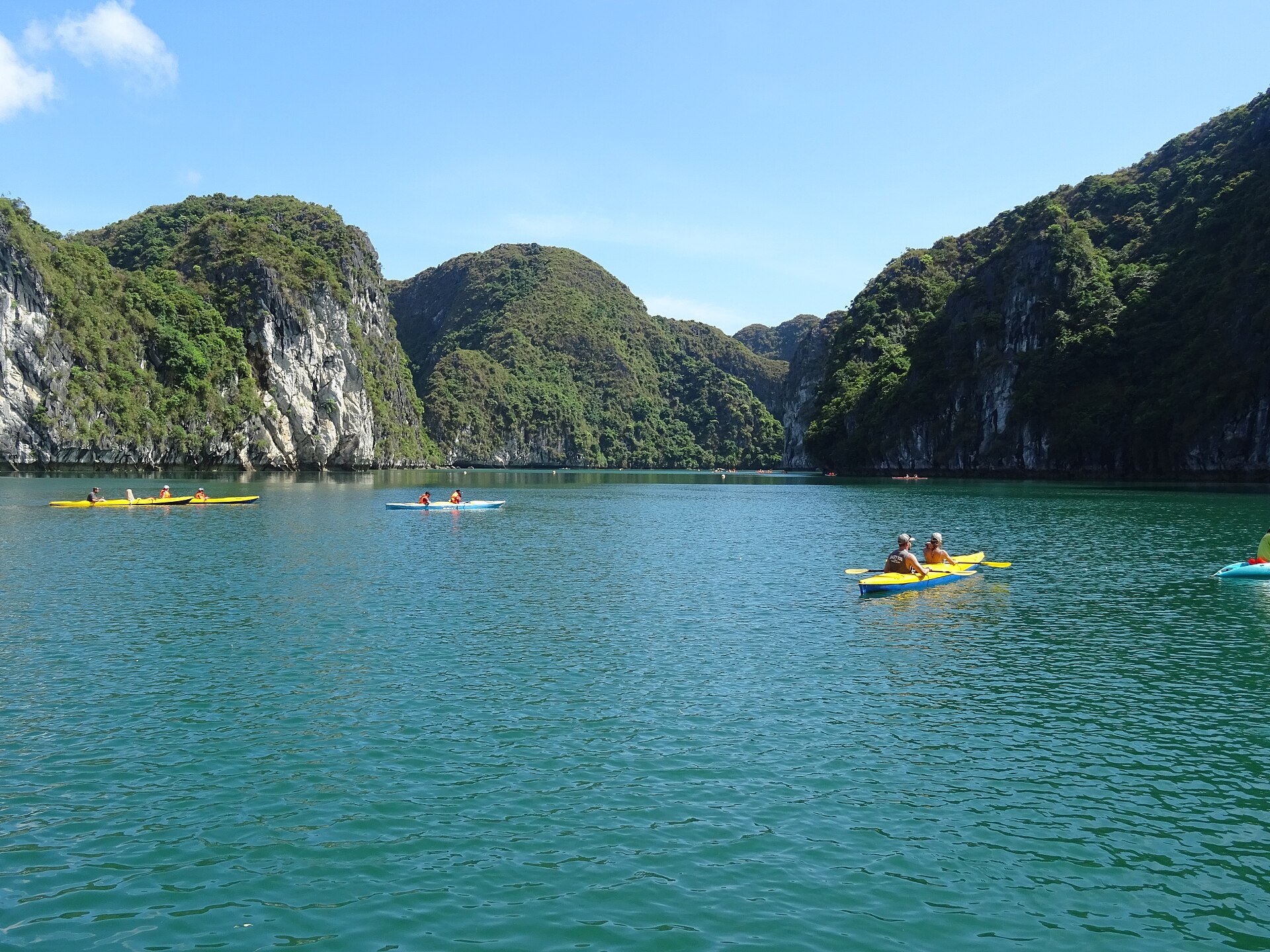
Kayaking in a calm lagoon enclosed by rock formations – a defining experience of the Ha Long – Lan Ha Bay region. Photo: Christophe95 / Wikimedia Commons, CC BY-SA 4.0.
Visiting Sang Toi Cave: The Experience
Kayaking
Kayaking is the most hands-on and immersive way to explore the cave. Each kayak typically seats 2 people and comes with a life jacket and paddles. You control your own pace, stopping close to the rock walls to admire the waterline marks, oysters clinging to the stone, or positioning yourself at the perfect angle to photograph the cave arch. The entrance to the cave is quite low, so you will need to lean back and hold your paddle parallel to the boat to avoid hitting the walls.
Kayaking is best suited for those in good health who are already comfortable paddling or willing to learn. If it is your first time, listen carefully to your guide's instructions on how to hold the paddle and maintain balance before setting off.
Taking a Rowboat
Rowboats (small bamboo or wooden boats) are rowed by local residents and carry around 6–8 passengers each. This is a relaxed option for families with young children, older guests, or anyone who prefers not to paddle. Sitting in a rowboat gives you more time to take in the scenery and take photos, and you can chat with the rower about life on the bay.
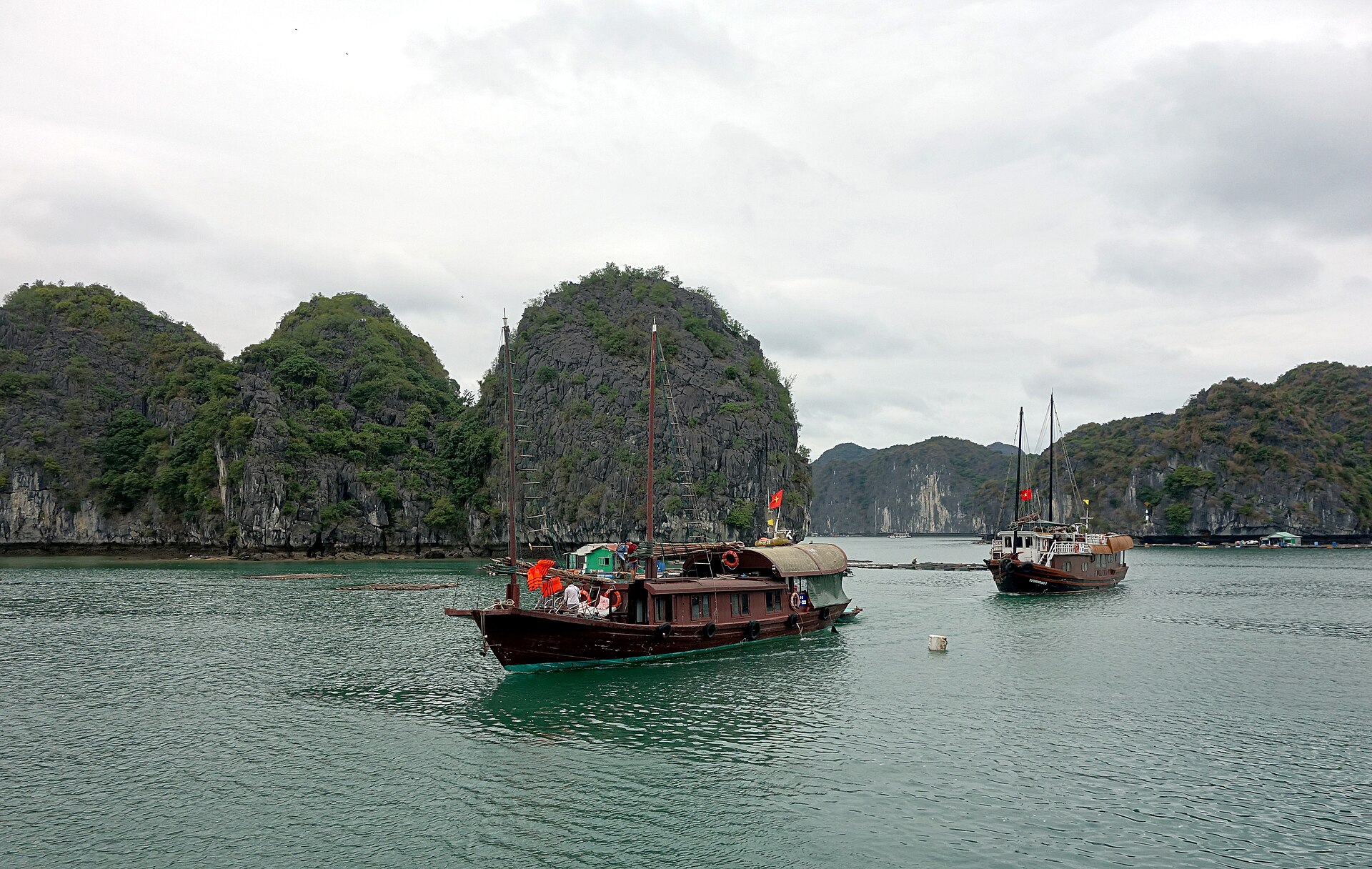
A wooden boat on Lan Ha Bay. Rowboats paddled by locals are a leisurely way to enter the cave. Photo: Velvet / Wikimedia Commons, CC BY-SA 4.0.
Observing Nature
The Cat Ba Archipelago is home to the Cat Ba langur (golden-headed langur) – an endemic primate species that is critically endangered. The chances of spotting a langur during a visit are very slim, but macaques and various bird species are fairly common on the cliff walls around the cave area. Observe wildlife from a distance, do not feed the animals, and keep noise to a minimum.

The Cat Ba langur – a critically endangered endemic primate of the Cat Ba Archipelago. Photo: ALOnIShOnETH / Wikimedia Commons, CC BY-SA 4.0.
Suggested Timing and Itinerary
-
Duration: approximately 1–1.5 hours for the full round trip, including time inside the lagoon.
-
Best time of day: morning (around 7–9 a.m.) when the light is soft, the water is calm, and boat traffic is minimal. Many overnight cruises schedule this activity for the final morning before a late brunch.
-
Best season: approximately April through October offers warm weather, clear water, and ideal kayaking conditions. June through October is typhoon season, and activities may be cancelled in bad weather. In winter (December–February), it is cold and windy – dress warmly and check with the cruise operator whether kayaking is available.
Please note that entry times to the cave are determined by the tour operator and tidal conditions, not by visitor preference. Itineraries on cruise ships are therefore typically listed as "estimated" and may change on the day.
How to Get to Sang Toi Cave
-
Overnight cruise from Ha Long: many itineraries pass through the Ha Long – Lan Ha border area and include a morning stop at Sang Toi Cave. Kayaking or rowboat activities are usually included in the ship's program; check the itinerary carefully to confirm whether the cave is on the route.
-
Day tour from Cat Ba: departing from Ben Beo Pier (Cat Ba town), boats head into Lan Ha Bay combining kayaking, swimming, and sightseeing – typically lasting half a day to a full day.
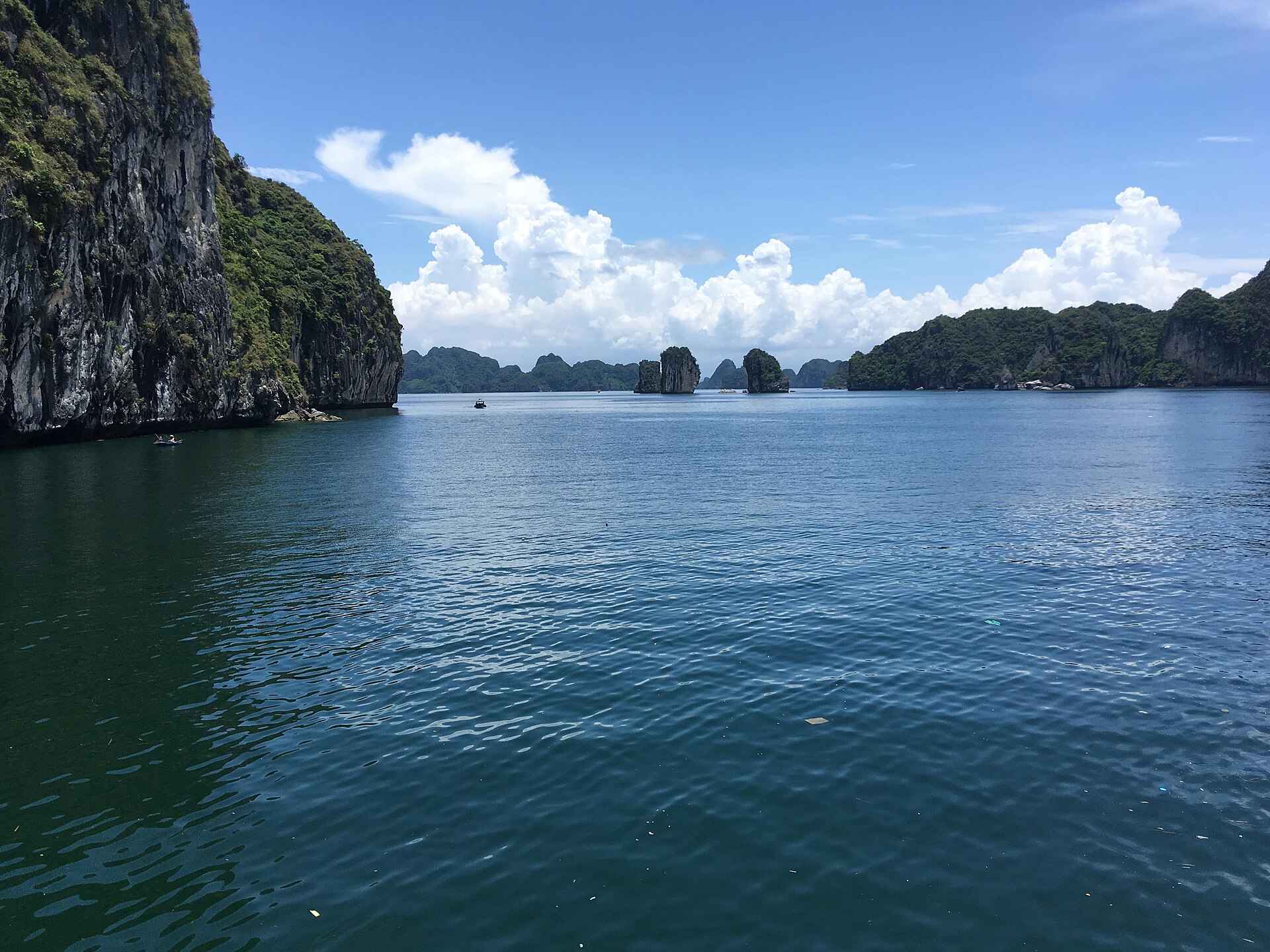
The waters bordering Lan Ha Bay and Ha Long Bay, a route travelled by many cruise ships. Photo: Christophe95 / Wikimedia Commons, CC BY-SA 4.0.
Tips and Safety Guidelines
-
Always wear a life jacket throughout the kayaking or rowboat experience, even if you can swim.
-
Duck low when passing through the cave entrance; do not stand up in the boat, and keep your hands inside the vessel to avoid hitting the rock walls.
-
Stay with your group and guide; do not paddle into the Dark Cave or narrow passages that are off-limits.
-
Wear quick-dry clothing and closed-heel sandals; put on a hat and apply sunscreen, as most of the time is spent outdoors on the water.
-
Put your phone in a waterproof pouch and use a wrist strap or neck strap for your camera. Items dropped in the water are almost impossible to retrieve.
-
Do not touch, break off, or carve into the cave walls, and do not dispose of rubbish in the water – this is a core zone of a UNESCO World Heritage Site.
-
Young children, elderly guests, and pregnant women should opt for a rowboat rather than a kayak, and should check with the cruise operator about participation requirements before booking.
Nearby Attractions to Combine
Sang Toi Cave is often included on the same itinerary as Dam Ao Ech – a sheltered lagoon ideal for kayaking and swimming – along with Viet Hai Village on Cat Ba Island, where you can cycle along village paths through a valley of limestone mountains. On a multi-day cruise, you can also visit the small beaches of Lan Ha Bay, Cai Beo fishing village, or the iconic attractions of Ha Long Bay such as Sung Sot Cave and Ti Top Island.
Sang Toi Cave is not a "grand spectacle" destination, but it is precisely this sense of quiet and unspoiled beauty that stays with so many visitors long after they leave: the moment your paddle passes beneath the stone arch and an expanse of brilliant blue water opens up before you.
Frequently asked questions
Where is Sang Toi Cave?
The cave is located in Lan Ha Bay, part of the Cat Ba Archipelago (Hai Phong), in the area bordering Ha Long Bay. It is approximately 30 minutes by boat from Cat Ba town.
What is the difference between Hang Sang and Hang Toi?
Hang Sang (Light Cave) is wide, open, and naturally lit – the passage most visitors use. Hang Toi (Dark Cave) is longer, narrower, and almost completely dark; it can only be traversed at low tide and is therefore often closed to visitors.
Should I kayak or take a rowboat?
Kayaking suits those who are fit and keen to explore independently. Rowboats are paddled by local residents and are ideal for families with young children, elderly guests, or anyone who prefers not to paddle themselves.
How long does it take to visit Sang Toi Cave?
Approximately 1–1.5 hours for the full round trip, including time inside the lagoon and back out.
Can cruise ships enter the cave?
No. Large vessels anchor outside, and guests transfer to kayaks or rowboats to enter the cave.
Can non-swimmers visit?
Yes, as long as you wear a life jacket throughout the time on the boat and follow your guide's instructions. Those who are not confident in the water should choose a rowboat rather than a kayak.


