

Taking parents or grandparents on a cruise around Ha Long Bay or Lan Ha Bay is a gift many families choose: minimal moving around, no switching hotels, sleeping and dining right on board while still soaking in the heritage scenery. Compared to a trip that involves hiking, lots of walking, or sitting in a vehicle all day, a cruise is a relatively gentle option for older adults.
That said, to make the trip truly comfortable, you need to choose the right vessel, the right cabin type, and prepare accordingly in terms of health and itinerary. This article compiles tips for cruising with older adults: how to choose a cruise and cabin, which activities to join or skip, how to prepare medications and meals, and what questions to ask the operator before booking.
Why cruises suit older adults
-
Minimal movement: board once and all activities take place around the vessel — no lugging suitcases between accommodations.
-
Slow pace: guests can rest in the cabin or sit on deck enjoying the scenery at any time.
-
Convenient dining: meals are served at the on-board restaurant, and guests can request soft, less spicy, or less salty dishes.
-
Staff on hand: from boarding and luggage handling to meal service.
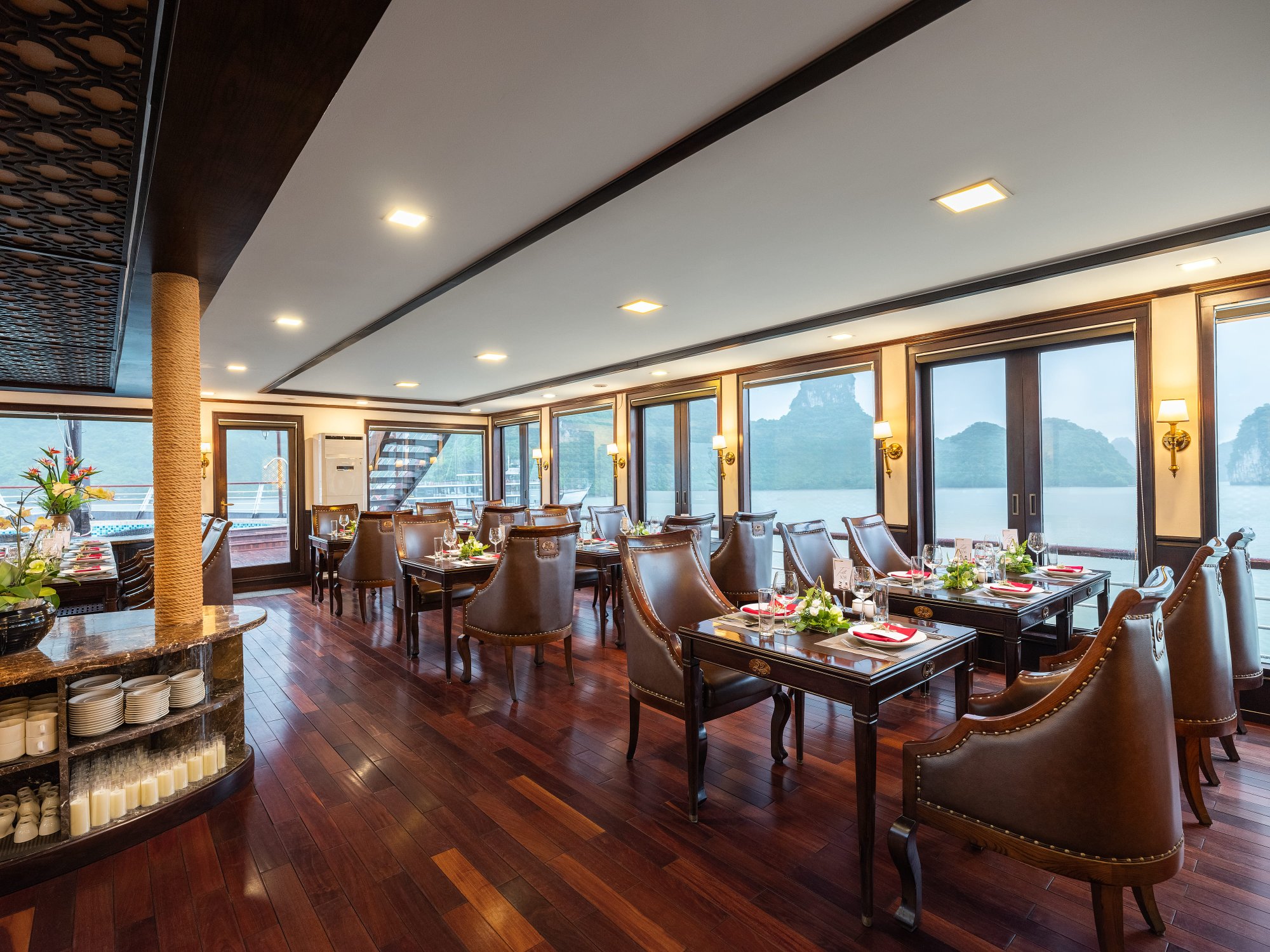
The on-board restaurant is spacious, allowing older guests to dine while enjoying the view. Photo: Amanda Luxury Lan Ha Cruise.
Choosing a cruise: key things to check
-
Calmer, less crowded routes: Lan Ha Bay is generally quieter, though vessels travel farther from the port — always ask about total travel time on the water.
-
Staircases and elevators: most cruises do not have elevators and the stairs between decks can be steep. Ask in advance so you can choose a cabin on a suitable deck.
-
Boarding access: some vessels require guests to transfer via a tender boat to reach the main ship; stepping on and off can be difficult for those with limited mobility. Confirm whether the vessel docks directly at a pier.
-
Comfortable common areas: a restaurant, lounge, and shaded deck area where older guests can sit and rest out of the sun or wind.
-
Medical staff or first-aid kit on board: ask whether the vessel carries a basic first-aid kit, has a procedure for assisting unwell guests, and how long it takes to return to shore if needed.
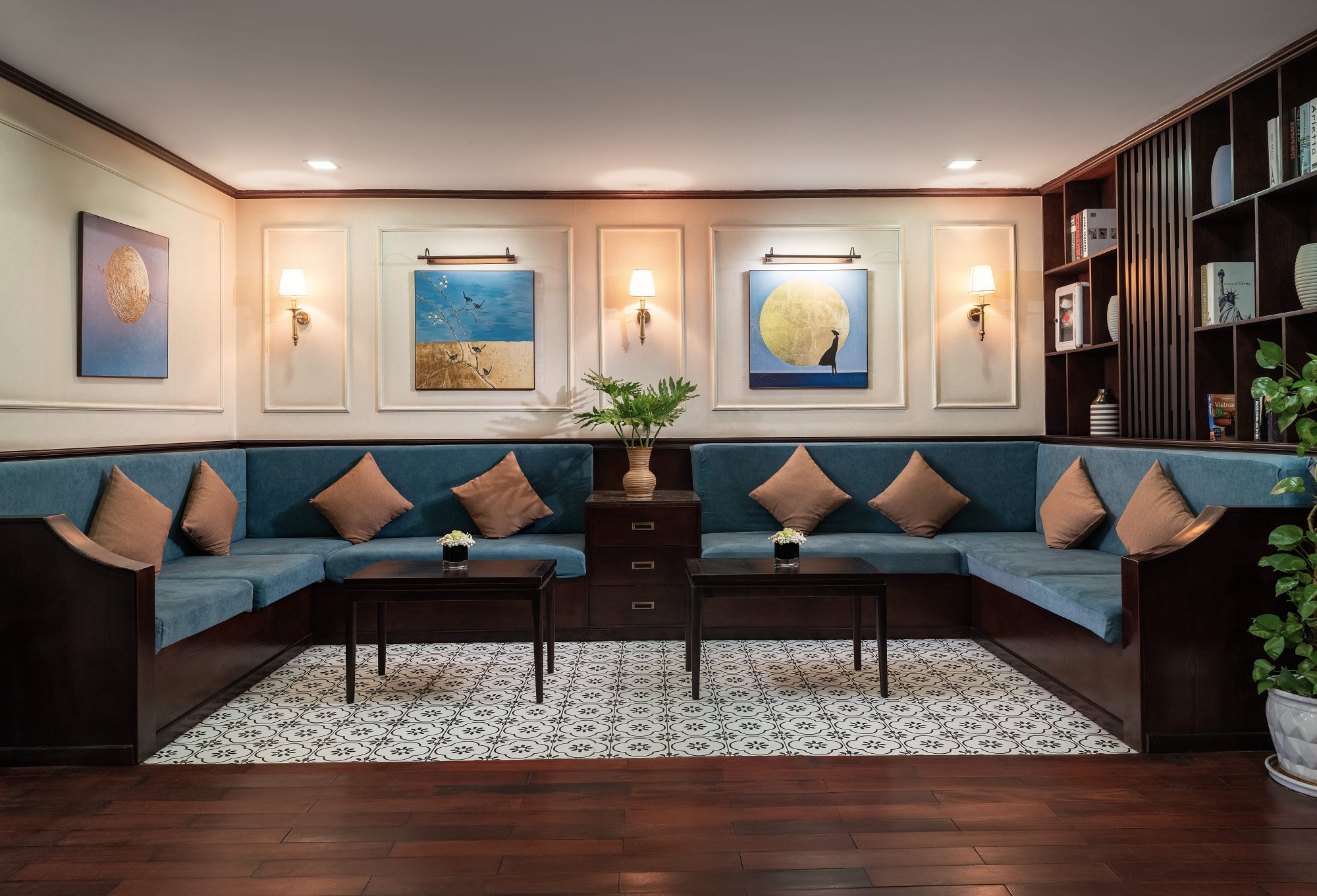
The on-board lounge, where older guests can sit, rest, and chat. Photo: Amanda Luxury Lan Ha Cruise.
Choosing a cabin for grandparents or parents
-
Lower deck or close to the restaurant: less stair-climbing required.
-
Midship position: less rocking motion, better for those prone to seasickness.
-
Bed height and bathroom layout: opt for beds that are not too high; ask whether the bathroom has a walk-in shower or only a bathtub (a high-sided tub can be difficult for older guests to step in and out of).
-
Adjacent or connecting cabins: if travelling with children or grandchildren, book nearby cabins for easy assistance during the night.
-
Balcony: very convenient for older guests to sit and enjoy the scenery from the cabin without needing to go up to the deck.
For example, according to information on Hotelux, Amanda Luxury Lan Ha Cruise has 20 cabins, all with balconies, ranging from 30 m² to 45 m² depending on category. For older guests, ask about the deck location of each cabin at the time of booking.
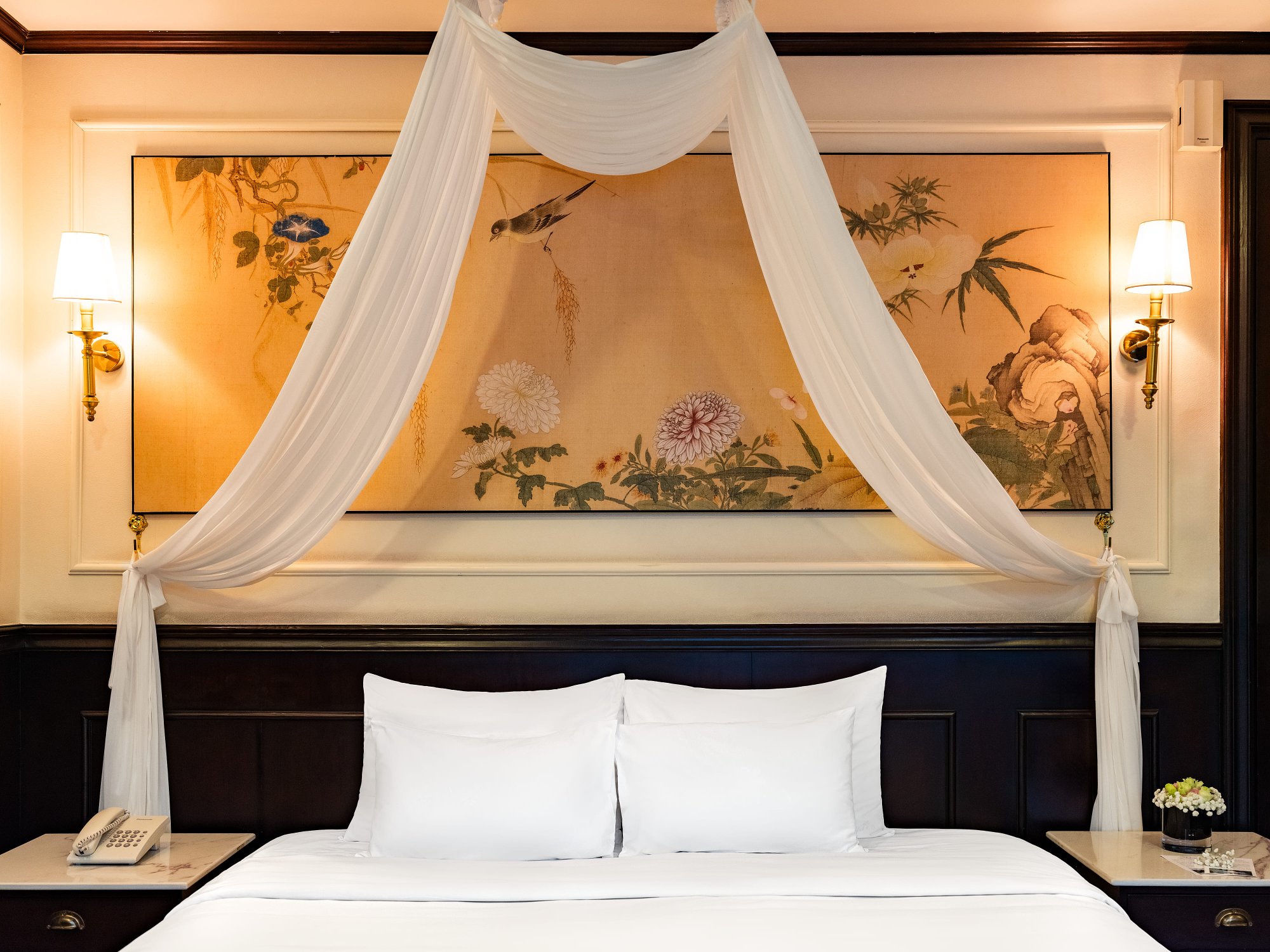
A quiet cabin where older guests can rest after activities. Photo: Amanda Luxury Lan Ha Cruise.
Itinerary: what to join and what to skip
A cruise typically offers many activities, but older adults do not need to participate in all of them. Suggestions:
-
Recommended: sunset watching on deck, light cooking classes, afternoon tea, dinner, morning tai chi (if offered), bamboo boat or rowing boat trips to fishing villages.
-
Consider carefully: cave visits (often involving many steps and slippery, damp surfaces), hilltop viewpoints (such as the summit of Ti Top Island), and kayaking.
-
Skip if health does not permit: high-climbing activities, long-distance swimming, or boarding and alighting small boats in rough seas.
Once on board, let the tour guide know which members of the group will be staying on the vessel during more strenuous activities. Staff can usually serve tea and water to guests who remain on board.
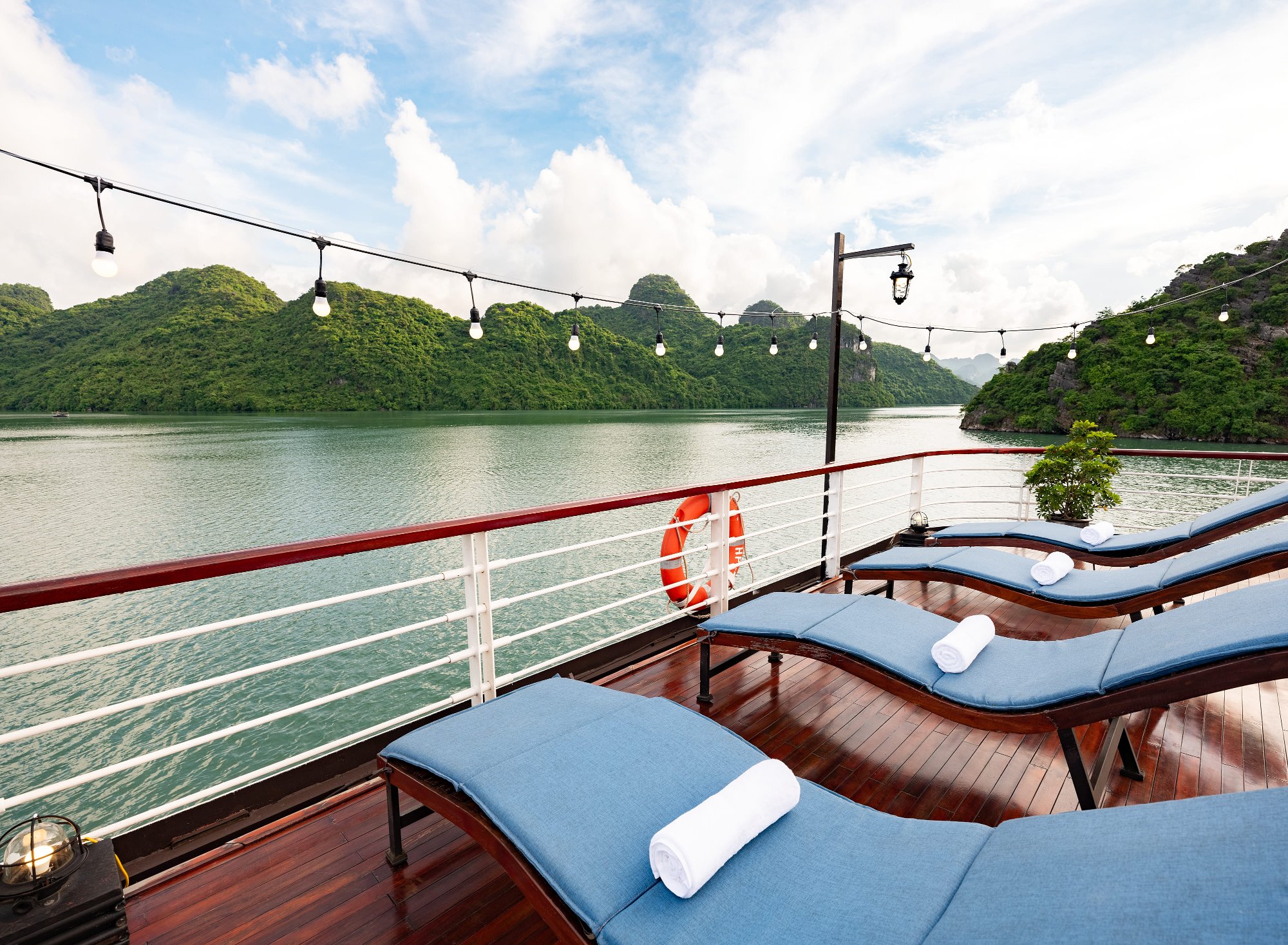
The deck with sun loungers, where older guests can relax while the rest of the family goes on excursions. Photo: Amanda Luxury Lan Ha Cruise.
2 days 1 night or 3 days 2 nights?
For a first trip, a 2-day 1-night package is usually the safer choice: enough to experience the sunset, dinner, and sunrise without being overly tiring. If grandparents are in good health and prefer a leisurely pace, a 3-day 2-night package allows for a slower rhythm with more downtime during the day.
Health preparation and medications
-
Daily prescription medications: pack enough for the entire trip plus a few extra days as a buffer; keep them in a carry-on bag rather than in checked luggage.
-
Motion sickness remedies: take medication before boarding as directed; also bring medicated balm and ginger candy.
-
Consult a doctor: if the older adult has a chronic condition, has recently recovered from illness, or has cardiovascular or respiratory concerns.
-
Documents: ID card, health insurance card, a list of current medications, and emergency contact numbers.
Dining for older adults
-
Notify the operator before booking if soft, low-fat, low-salt, low-sugar, non-spicy, or vegetarian dishes are needed.
-
Limit unfamiliar seafood and raw dishes if digestion is sensitive.
-
Stay well hydrated, especially in summer; limit alcohol consumption.
-
Eat a light meal before the vessel departs to reduce seasickness.
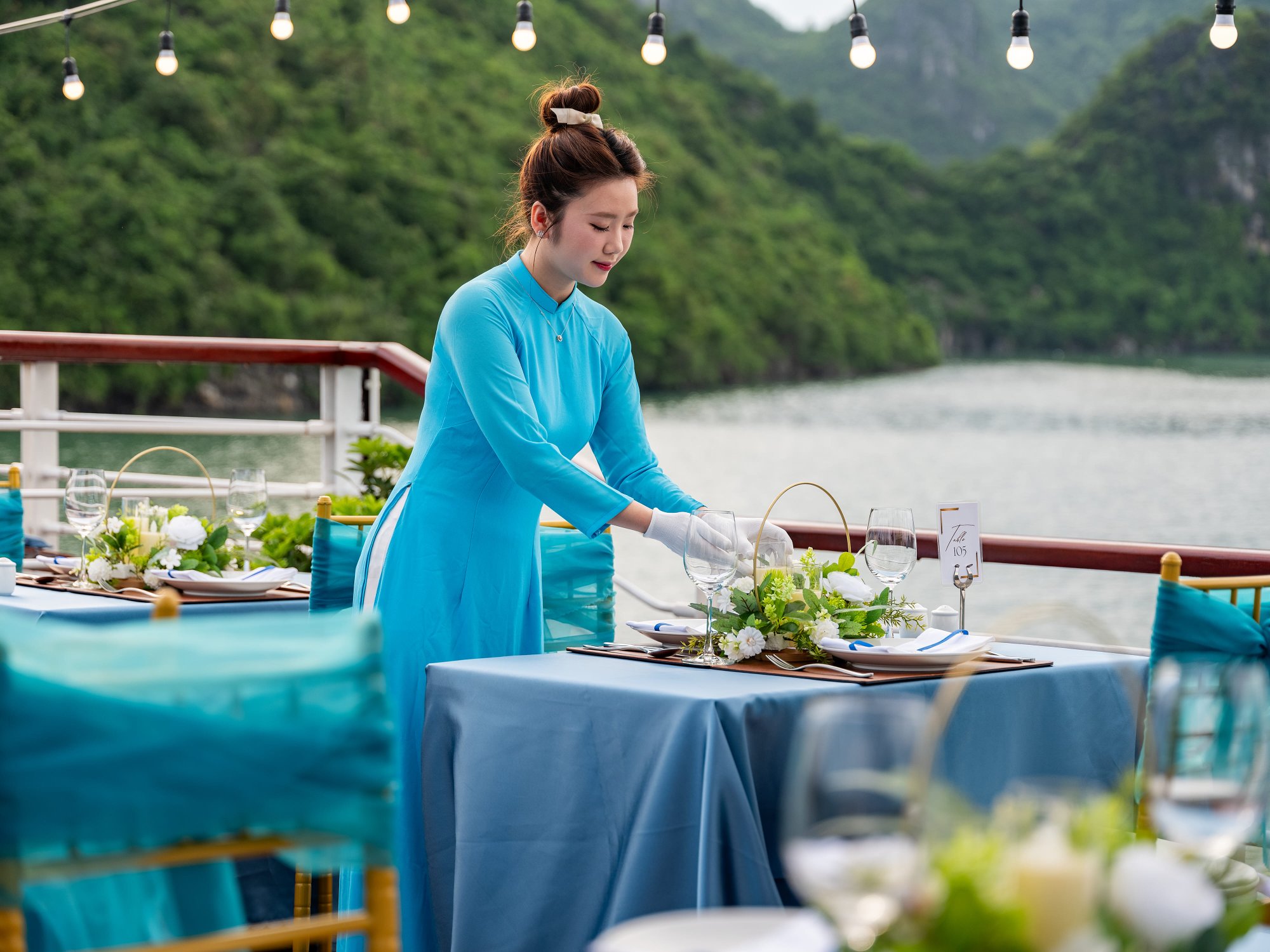
Cruise staff can assist with arranging convenient seating for older guests. Photo: Amanda Luxury Lan Ha Cruise.
Gentle experiences well suited to older adults
Many cruises offer cultural and relaxation activities suitable for older guests. For example, according to the operator's description, Amanda Luxury Lan Ha Cruise features programmes such as an ao dai fashion show, bamboo pole dancing, herbal foot soaking, and afternoon tea on deck. Activities like these are gentle yet allow grandparents to experience Vietnamese culture in a comfortable setting.
Clothing and items to bring
-
Flat-soled, non-slip shoes; avoid flip-flops on wet decks or in caves.
-
A light jacket for evenings and early mornings on deck, even in summer.
-
Wide-brimmed hat, sunglasses, and sunscreen.
-
A walking cane (if normally used) and a small torch for nighttime.
Choosing the right time to go
Older adults are generally most comfortable during spring (around March–May) and autumn (around October–November), when the weather is mild — not too hot or too cold. Avoid typhoon season (around July–September) and peak public holidays when crowds are at their heaviest.
Checklist of questions to ask the cruise operator
-
Does the vessel have an elevator? Which cabin requires the least stair-climbing?
-
Does the vessel dock directly at a pier, or do guests transfer via a tender boat?
-
Does the cabin bathroom have a walk-in shower?
-
Can the kitchen prepare soft, low-salt, low-sugar, or vegetarian dishes?
-
Which itinerary activities involve a significant amount of stair-climbing?
-
Does the vessel carry a first-aid kit and have a procedure for assisting unwell guests?
-
What is the date-change policy if an older guest is unwell before departure?
Amenities, itineraries, and services vary between vessels. Always confirm details with the operator at the time of booking, and consult a doctor if any member of your group has health concerns.
Photo credits
Cover photo and all photos in this article: Amanda Luxury Lan Ha Cruise.
Frequently asked questions
Can older adults go on a Ha Long Bay cruise?
Yes, a cruise is a relatively gentle option as it involves minimal movement. Choose a cabin that requires little stair-climbing, opt for a relaxed itinerary, and consult a doctor if there are any chronic health conditions.
Do cruise vessels have elevators?
Most cruises on the bay do not have elevators. Ask the operator to help you select a cabin on the deck that requires the least stair-climbing.
Should older adults visit caves?
It depends on their health. Caves often involve many steps and have damp, slippery surfaces; if mobility is limited, it may be more comfortable to stay on board and rest.
Should we book 2 days 1 night or 3 days 2 nights for grandparents?
For a first trip, 2 days 1 night is recommended; if grandparents are in good health and prefer a leisurely pace, 3 days 2 nights allows for a slower rhythm.
Can we request soft, low-salt meals?
Many vessels can accommodate this if notified before the tour is booked. Make sure to specify your requirements in writing and remind the crew again upon boarding.
What is the best season to take older adults on a cruise?
Spring (around March–May) and autumn (around October–November) offer the most pleasant weather; avoid typhoon season and overly crowded public holidays.


